Concrete & Masonry Case Studies — Northern Virginia
Real Projects. Real Results.
Every job tells a story. Here's how we've helped homeowners across Northern Virginia solve concrete and masonry problems — from safety hazards to full transformations. Each entry walks through the challenge, our approach, and the outcome.
Sunken Paver Patio Repair — Hidden Void Under Basement Steps Discovered in Ashburn
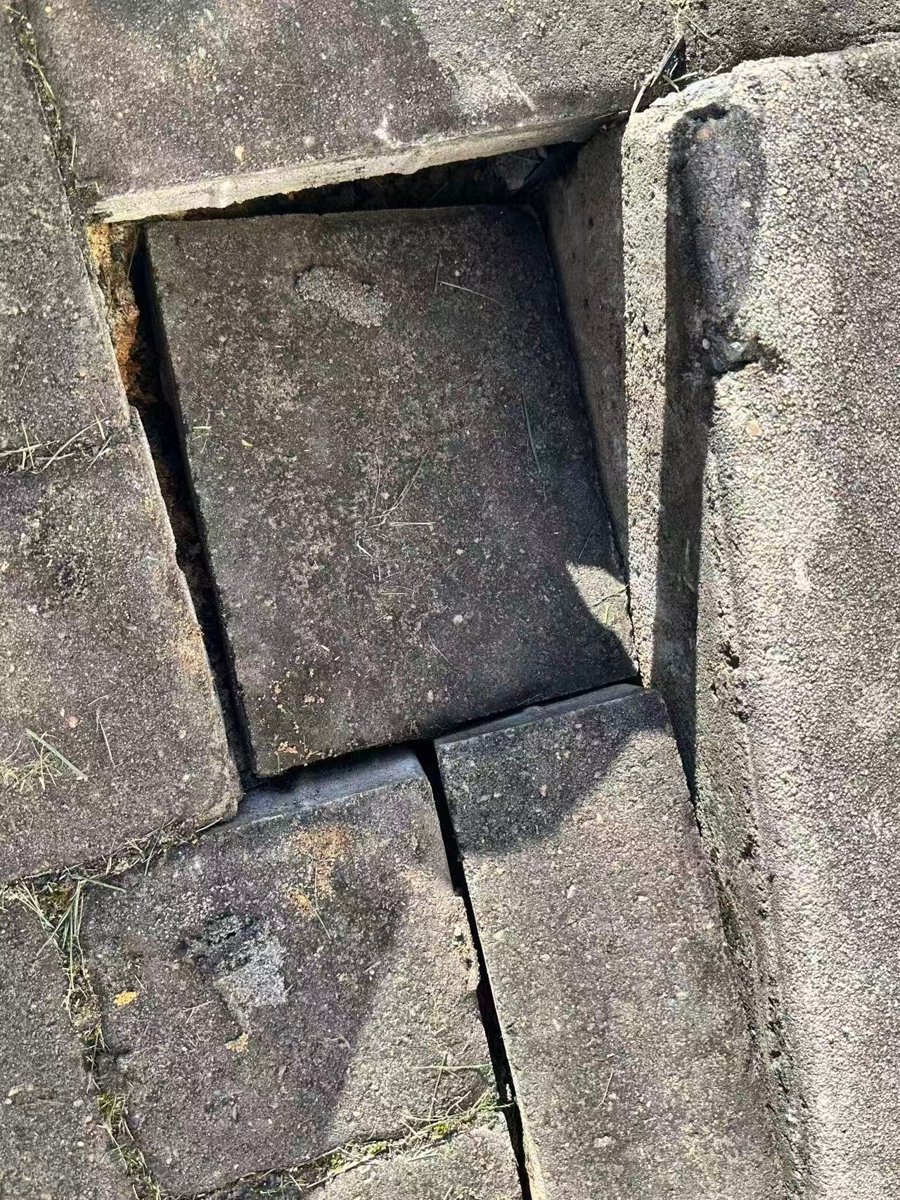
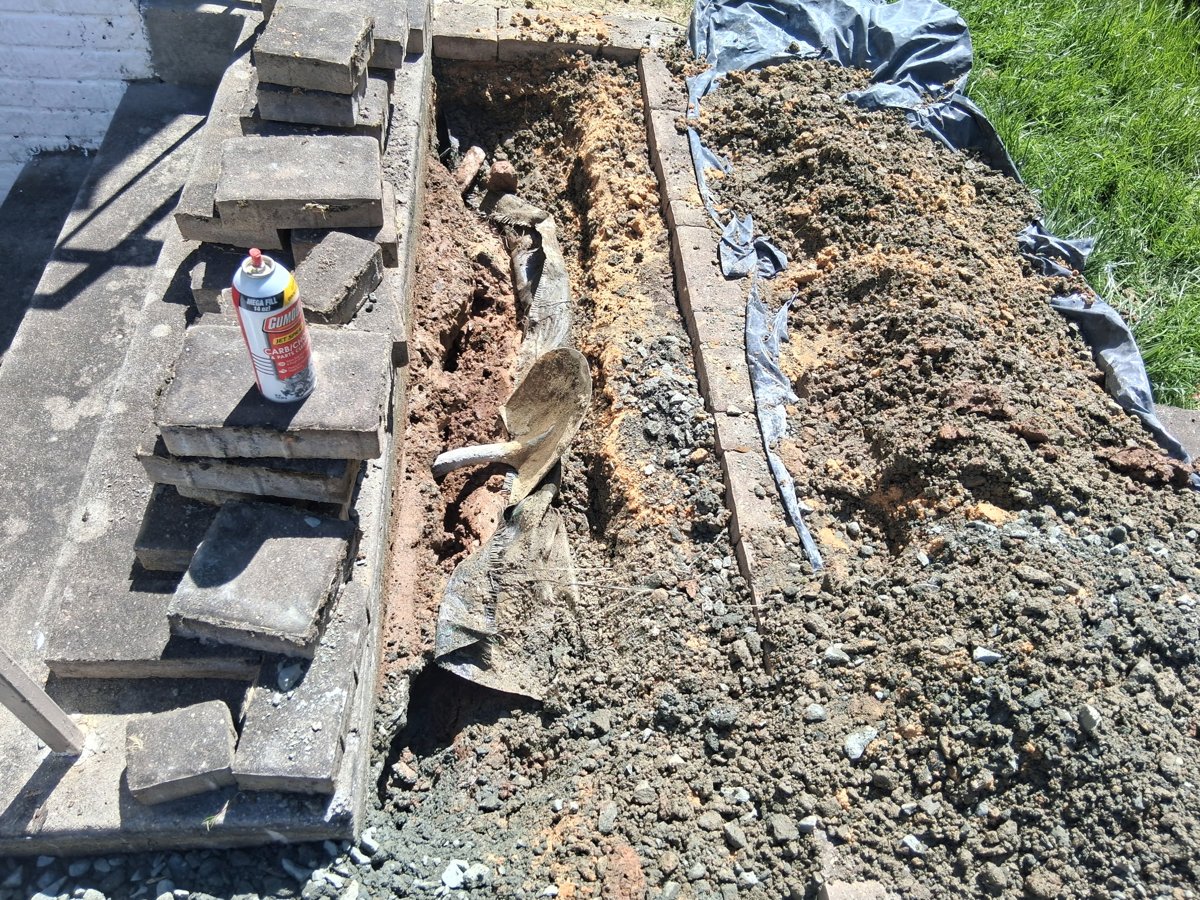
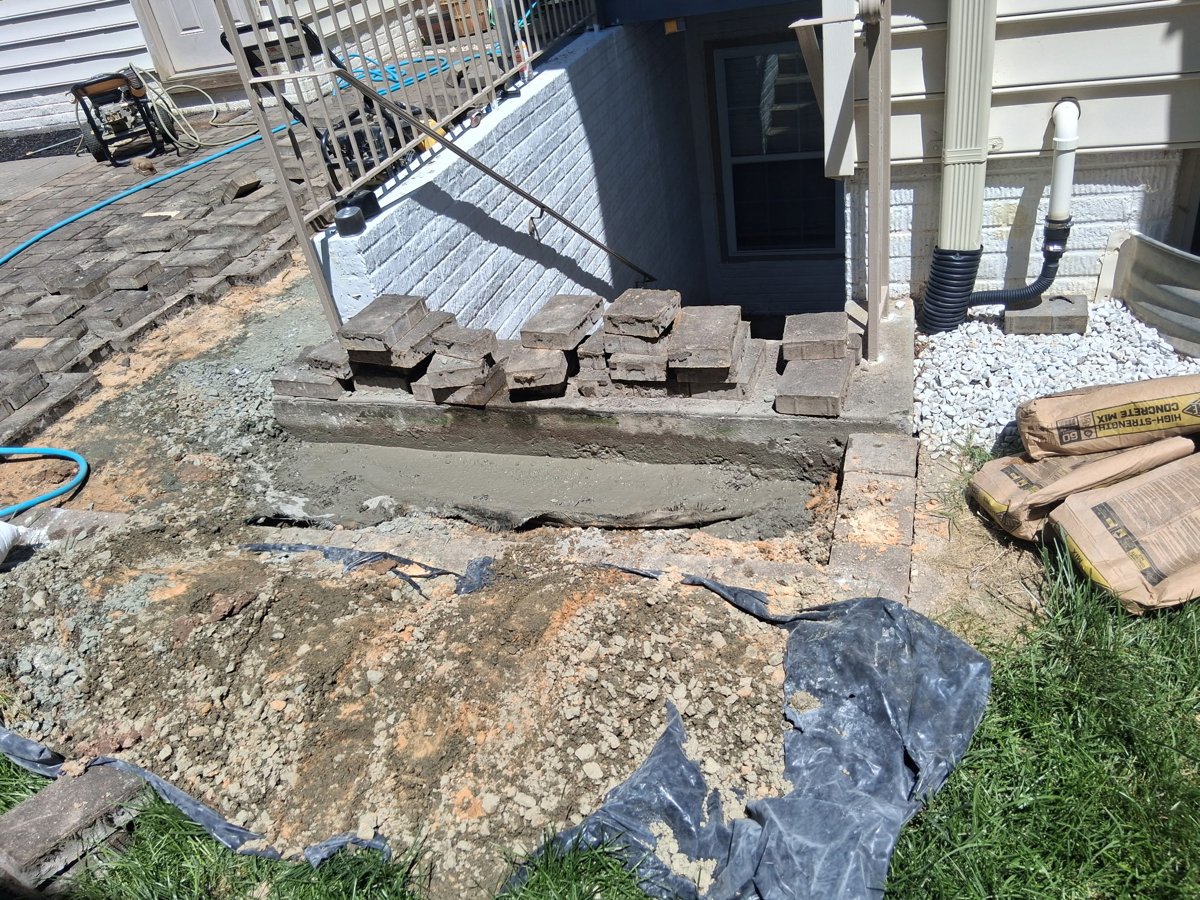
The homeowner had a section of their paver patio that had visibly sunken and shifted near the basement stairway — a classic sign of base washout. The original scope called for lifting the pavers, addressing the washout, re-leveling, and reinstalling. But when we pulled up the pavers, we found something far more serious: a large void had formed directly beneath the basement steps. Years of water erosion had hollowed out the ground underneath, leaving the entire stair structure without solid support.
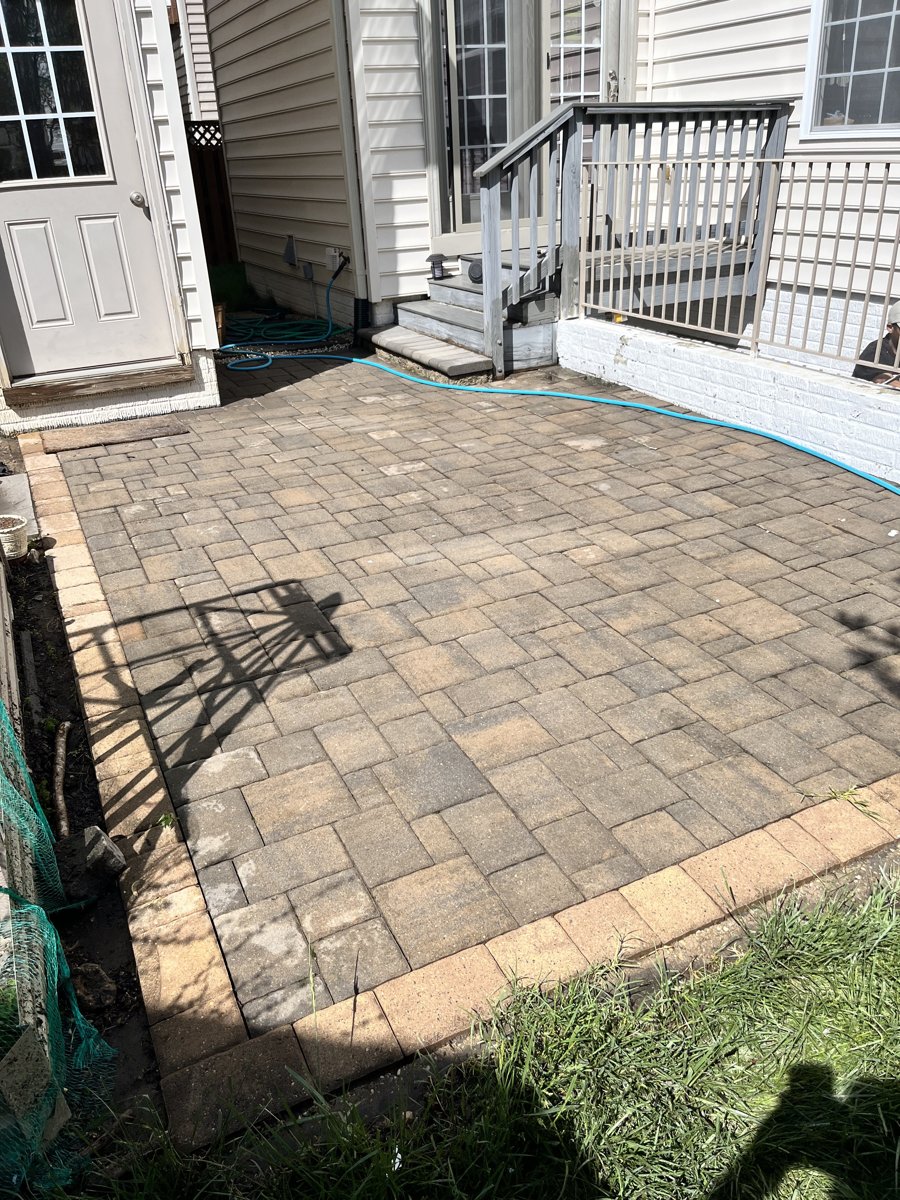
We carefully removed all pavers across the affected L-shaped area (9'4" from the house, 14' wide). The void under the stairs was completely filled with compacted fill material — this had to be done in layers, with mechanical compaction at each stage, to eliminate any risk of future settling. Once the void was fully stabilized, we re-graded the entire base using dirt, gravel, and leveling sand, mechanically compacted everything, and reinstalled the original pavers flush with the surrounding patio. The job finished with a full power wash of the patio, stairs, and front porch as a complimentary add-on.
The patio is level and stable again — and a serious hidden safety hazard under the stairs was eliminated before it became a structural failure. This is exactly the kind of problem that looks minor on the surface but gets much worse if ignored. The homeowner got back a clean, safe patio and the peace of mind of knowing the ground beneath their stairs is properly supported.
Front Stairway Repair — Turning a Safety Hazard Into a Clean, Safe Entry
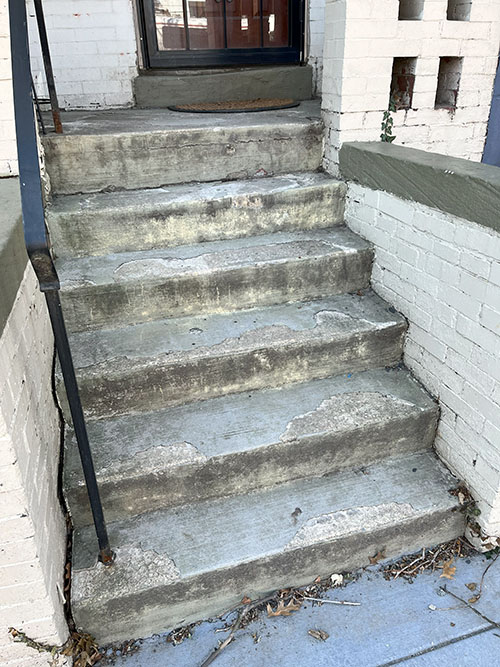
The front entry staircase had deteriorated significantly. A top layer of self-leveling concrete applied years earlier had cracked, chipped, and begun separating from the base — creating a genuine tripping hazard for the homeowner and their guests.
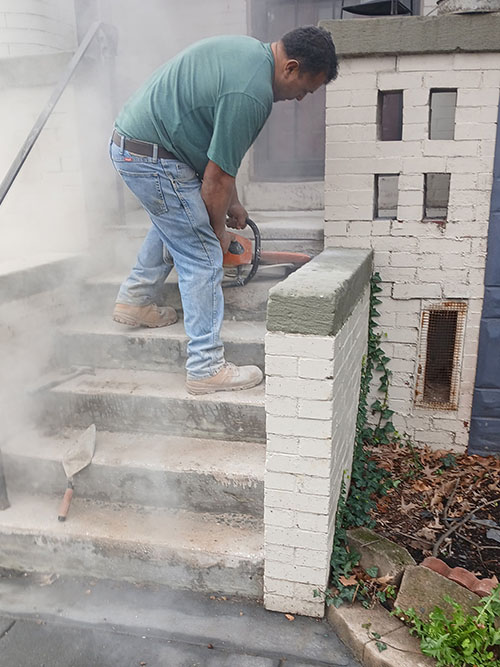
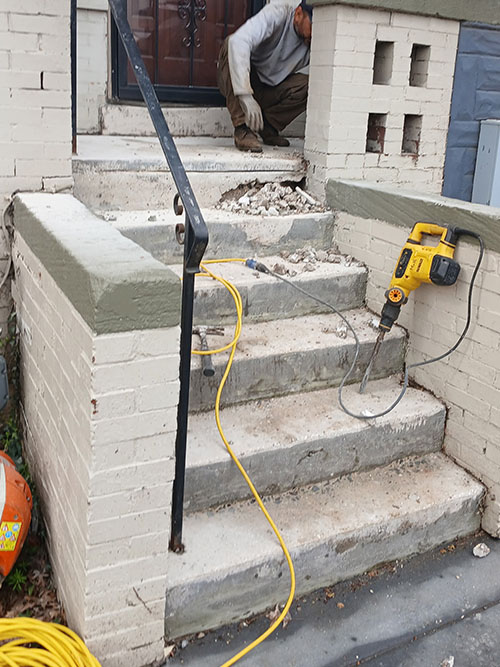
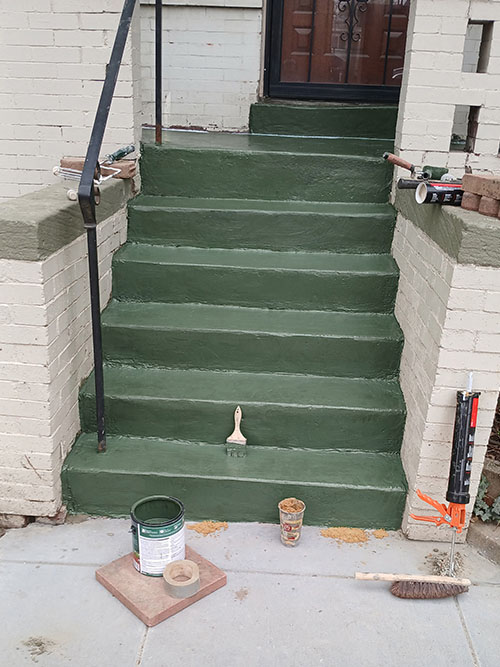
We ground away the failing overlay entirely rather than patching over it, which would only delay the problem. Once removed, we repaired the underlying weak spots to restore structural integrity, then finished with a fresh coat of paint and a complimentary power wash of the surrounding area.
The steps went from an active safety risk to looking brand new — fixed properly rather than just covered up, so the same problem won't come back in another year.
New Foundation & Patio — Adding Space and Function to a Burke Home
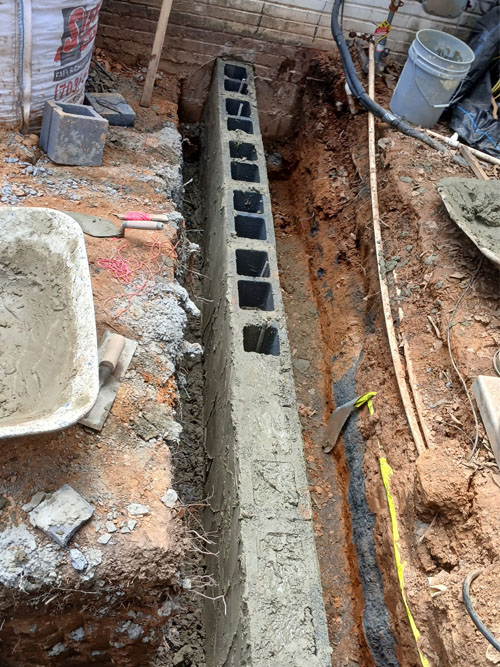
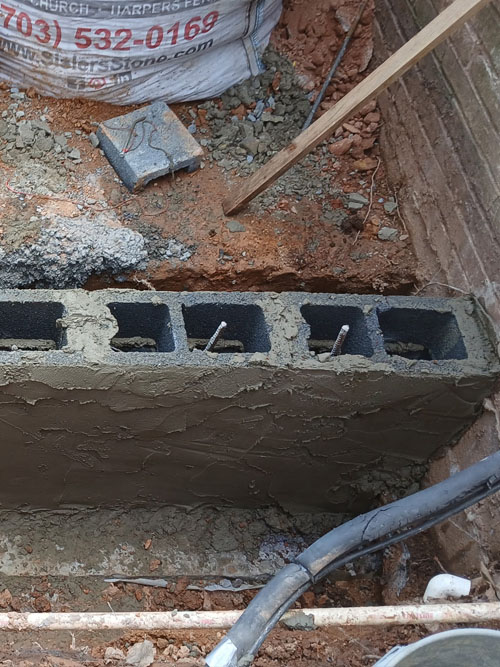
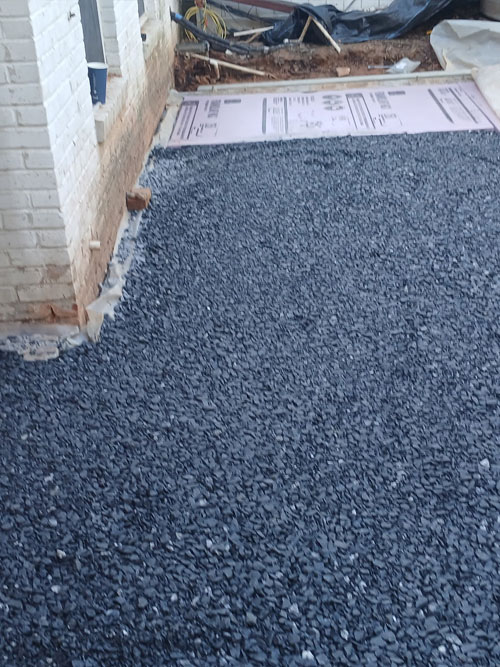
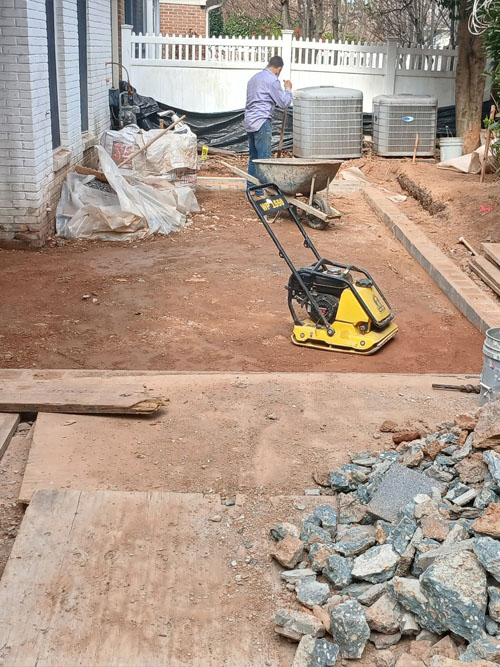
The homeowner wanted to significantly expand the usable space on the back of their property. The project required both a new foundation and a properly insulated patio slab to ensure durability through Northern Virginia's freeze-thaw cycles.
We constructed a new foundation on the back of the home, creating the structural base for the expanded hardscape. A key part of the design was integrating an insulation layer beneath the slab — ensuring the surface performs well year-round and remains comfortable underfoot in colder months.
The homeowner gained a fully functional, well-insulated outdoor patio area that more than doubled the usable space on the back of their property — built to last with no shortcuts on the structural or thermal elements.
Front Walkway Replacement — A Complete Curb Appeal Upgrade in Alexandria
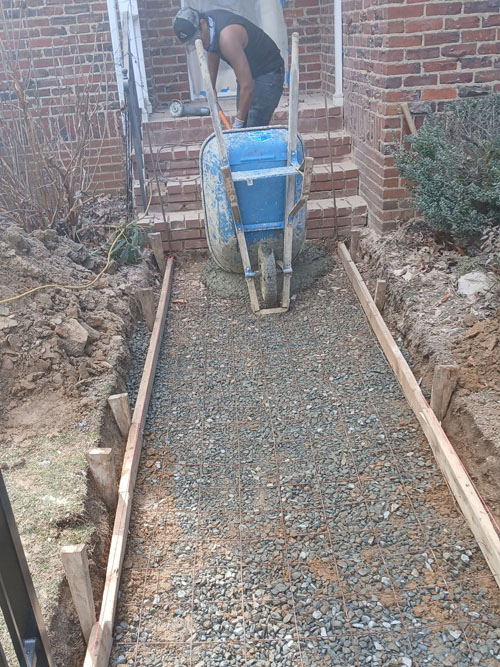
The home's original front entry and walkway had aged out — worn brick, outdated design, and a look that no longer matched the homeowner's vision. They wanted a full replacement that would enhance curb appeal and flow naturally with the existing brick exterior.
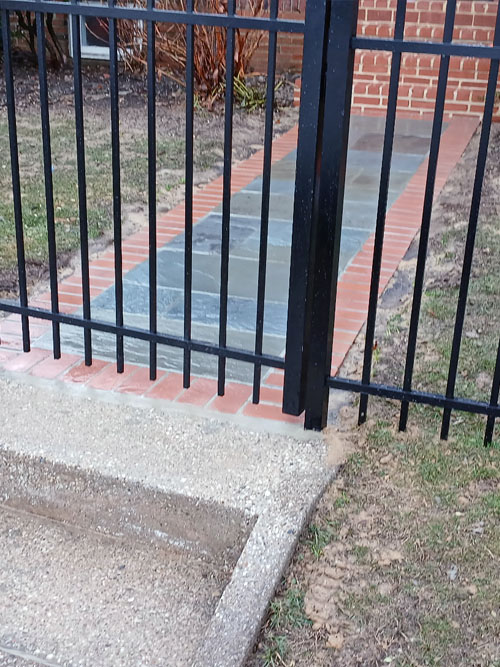
We removed the old staircase entirely and installed a new walkway blending natural flagstone with a classic brick border. The design was planned to complement the home's existing exterior — creating a cohesive look from the street to the front door.
The finished walkway transformed the home's entire street presence. The blended flagstone and brick design looks polished and intentional — the kind of upgrade that adds real value and makes a house stand out on the block.


Front Staircase Renovation — Flagstone and Stonework in Fairfax
The homeowner's front entry stairs were functional but plain. They wanted a significant visual upgrade that would make the entrance feel more intentional and welcoming, without replacing the underlying structure entirely.
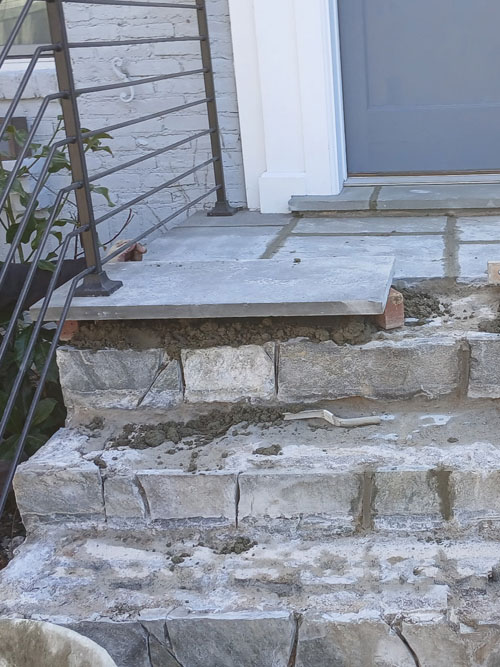
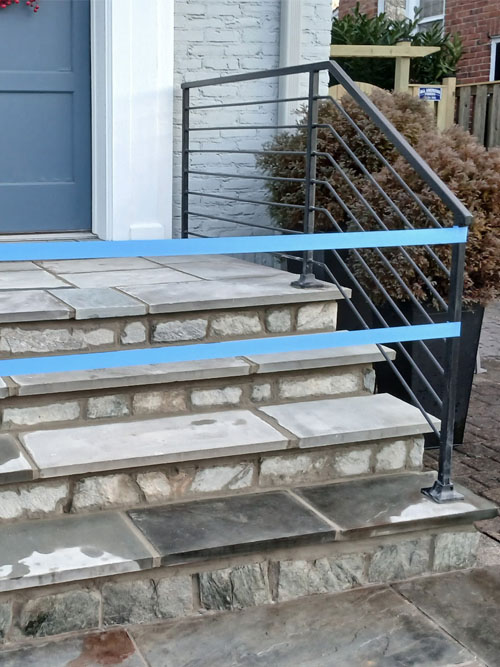
We installed flagstone across the top surfaces of each stair tread, then covered the front and side faces with decorative stonework to add texture and depth. Each stone was set carefully for level, fit, and visual continuity throughout the design.
The renovation transformed a standard concrete staircase into a standout architectural feature. The flagstone and stonework gave the home a noticeably more sophisticated street presence — a visible upgrade the homeowner and their neighbors noticed immediately.
Basement Waterproofing & Dual French Drains — Stopping Water Intrusion in Woodbridge
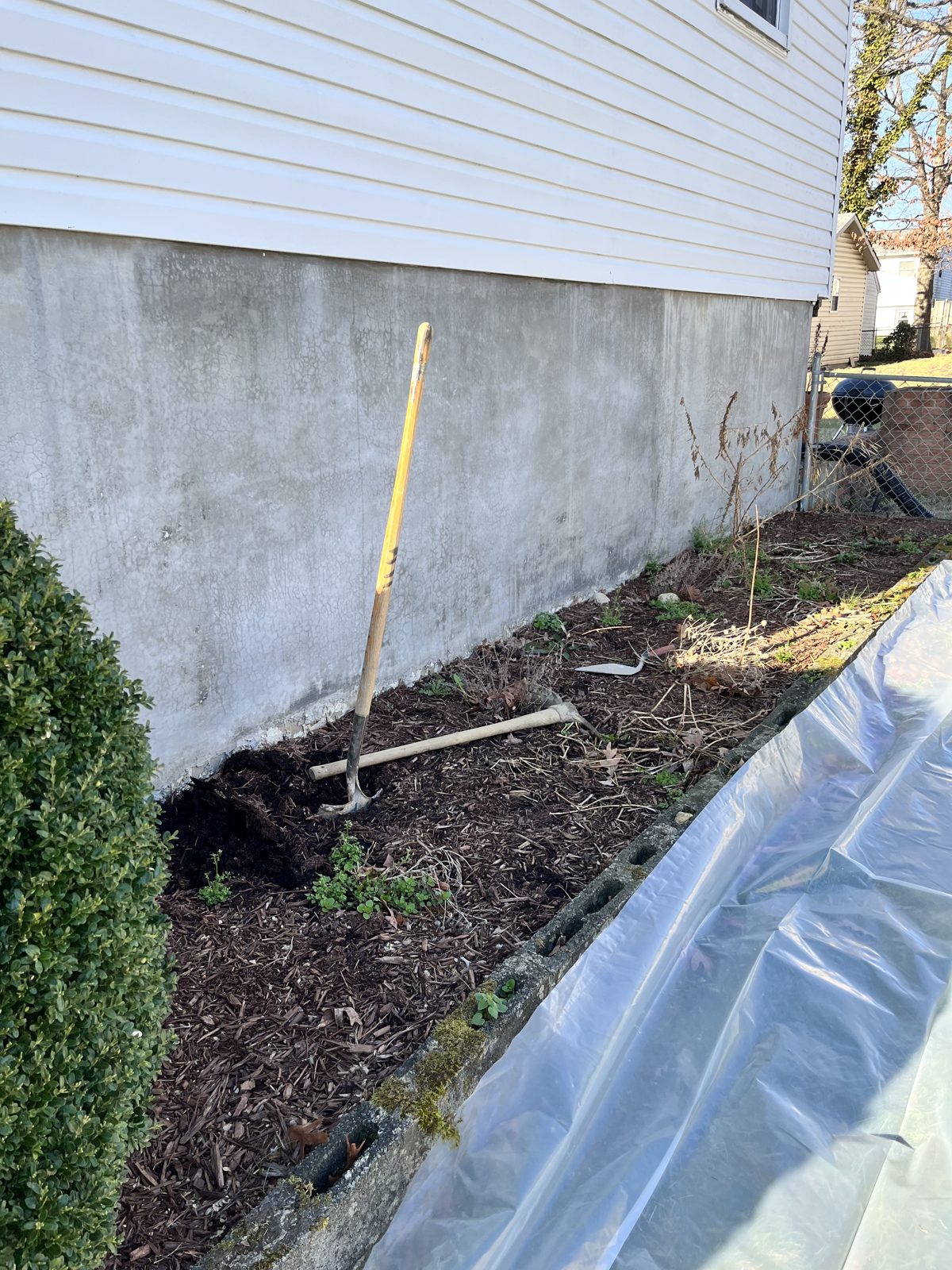
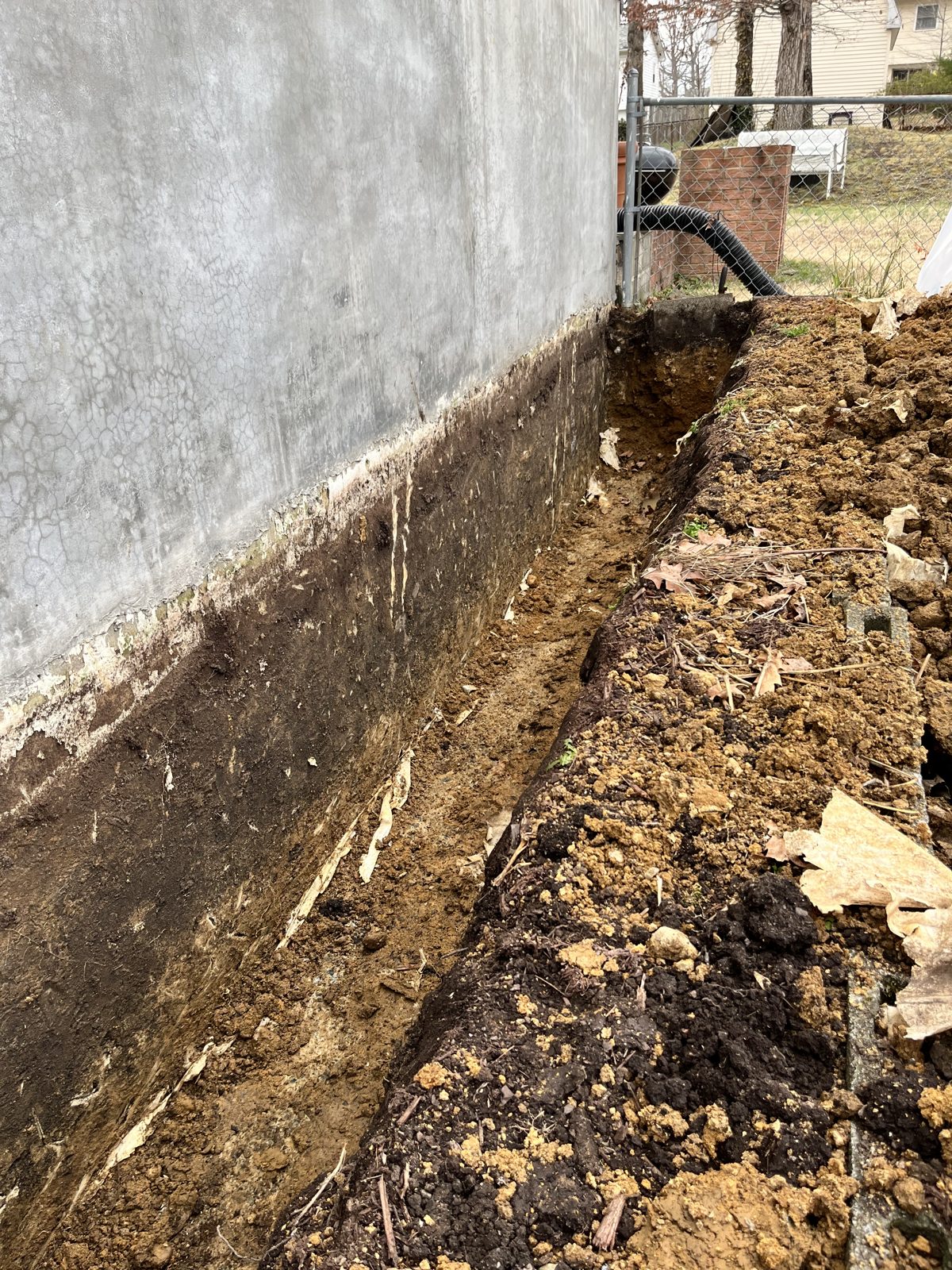
The homeowner was dealing with water getting into the basement through the right-side foundation wall. The original scope was straightforward: excavate along the foundation, waterproof the wall, and install a French drain to carry water away. But once we dug down, we found a bigger problem — water was actively collecting at the bottom of the trench, meaning groundwater was a real contributor, not just surface runoff.
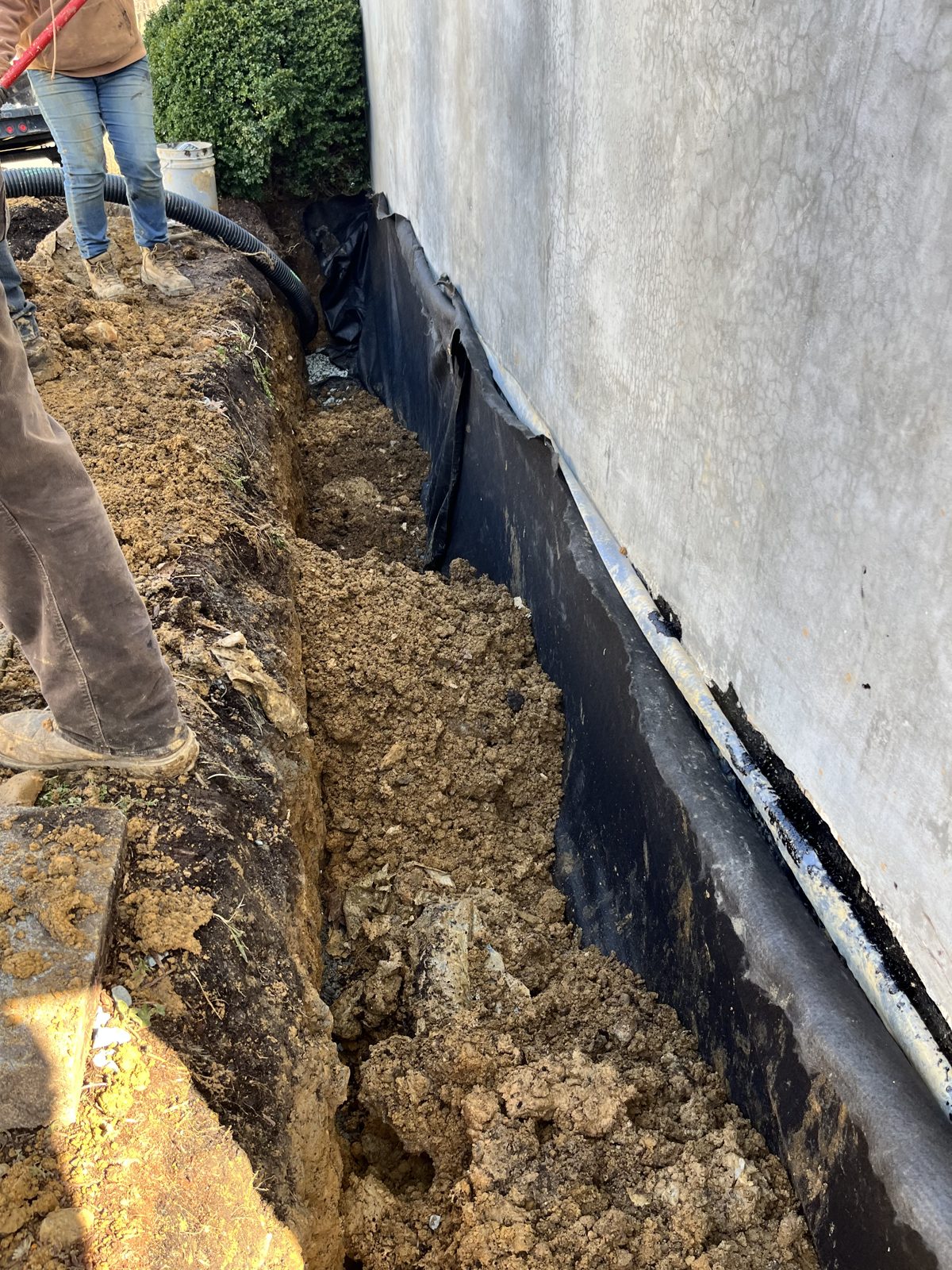
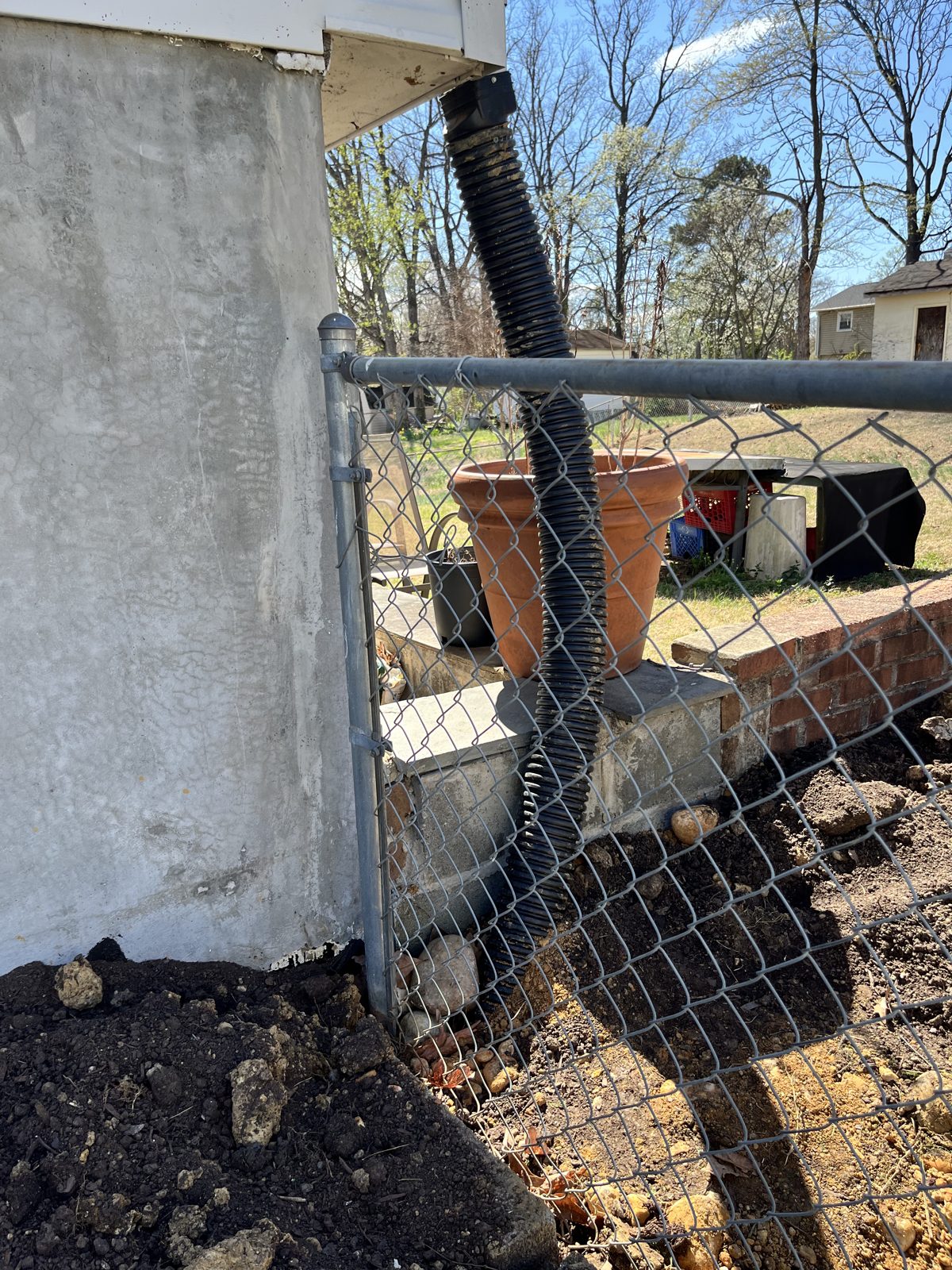
Rather than backfill over a problem we knew would come back, we expanded the scope on-site to match what the ground was actually telling us. We excavated roughly 22 feet along the right-side foundation wall, cleaned and prepped the exposed concrete, and applied a heavy-duty rubberized black waterproofing membrane to seal it against moisture intrusion. Then, instead of a single drain, we installed two French drains — one at standard depth and a second set noticeably deeper to catch the groundwater pooling beneath. We tied the home's gutter downspout directly into one of the drains so roof runoff is captured at the source, added a gravel bed to keep the system flowing freely, and routed the combined discharge well past the house and out toward the street, away from the foundation. The trench was then backfilled with native soil and graded for positive slope.
The homeowner now has a dry basement and a drainage system engineered for the conditions we actually found in the ground — not the conditions we assumed before digging. Surface water, roof runoff, and groundwater all have a clear path away from the foundation. It's the kind of fix that solves the problem once, instead of patching it and watching it come back next spring.